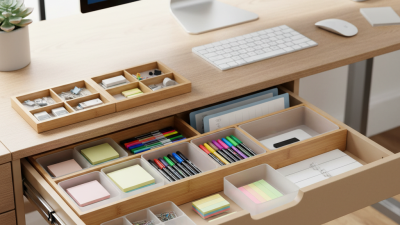
Choosing the right Office Desk Drawer Organizer can quietly transform a crowded workspace in 2026. For global buyers, the decision involves more than appearance. Drawer dimensions, material quality, shipping protection, and workplace habits all matter. A well-designed organizer should hold pens, clips, charging cables, sticky notes, and small tools without wasting valuable space. It should also remain stable when the drawer opens quickly.
Real-world use reveals details that product photos often hide. Smooth edges prevent snagging. Firm dividers reduce movement. Bamboo feels warm and durable, while recycled plastic may offer lighter shipping and easier cleaning. Some models include adjustable compartments, but their sliders can loosen over time. That weakness deserves attention. Buyers should check measurements in millimeters, not rely on phrases such as “standard size.” A difference of two centimeters can make an organizer unusable.
This guide examines leading options for offices, home workstations, shared facilities, and international procurement teams. It considers construction, capacity, maintenance, packaging, customization, and supplier communication. Verified dimensions and clear material descriptions support better purchasing decisions. Customer feedback can also reveal broken corners, inaccurate sizing, or difficult returns. Still, no ranking fits every desk. A compact organizer may suit a receptionist, but fail in a design studio with larger tools. We encourage buyers to compare practical evidence, request samples when possible, and test drawer clearance before ordering in volume. Small mistakes become expensive across hundreds of workstations. The best choice is not always the most stylish one. It is the organizer that performs reliably every day.
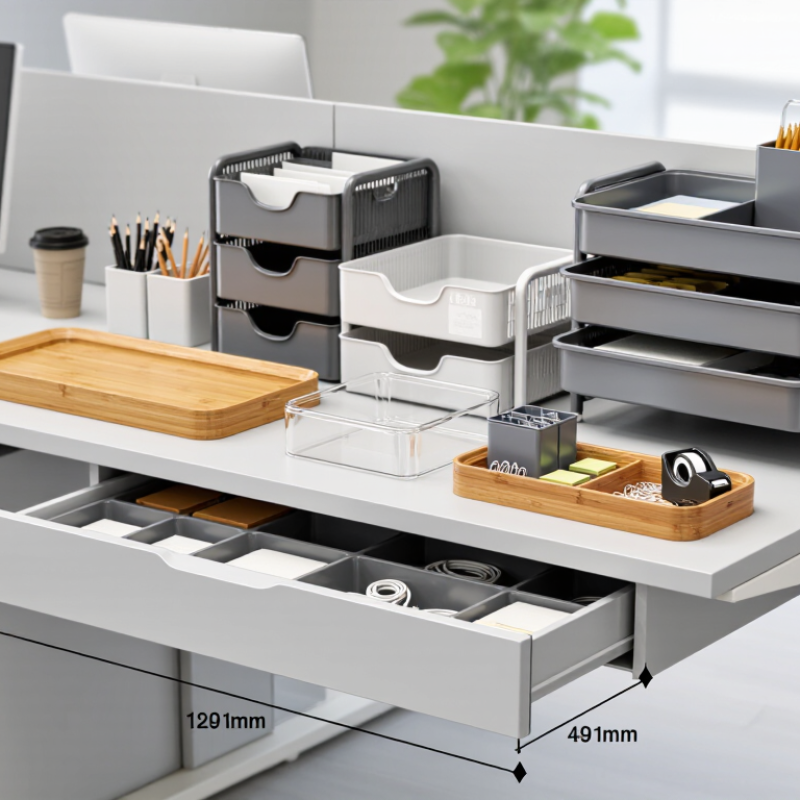
2026 Top Office Desk Drawer Organizers for Global Buyers
Office Desk Drawer Organizer Types for Different Workplace Needs
Workplace needs differ by role, space, and daily workflow. The 2024 State of the Global Workplace report recorded global employee engagement at only 23% in 2023. A crowded drawer will not solve that problem, but it can remove small daily frustrations. For shared offices, shallow compartment trays suit pens, access cards, cables, and notepads. Their removable sections support quick cleaning between users. Keep frequently used items near the front.
Remote workers often need flexible storage. Adjustable dividers can separate a headset, charging cables, stationery, and receipts without wasting deep drawer space. The 2024 Global Workplace Survey highlights employee demand for greater choice in where and how work happens. A modular organizer fits changing routines better than fixed compartments. Still, too many sections create visual noise. I have seen users abandon overly precise layouts within weeks.
For finance, administration, and design teams, different types work better. Vertical file inserts hold folders, while narrow trays protect small tools from shifting. Soft-lined compartments help prevent scratches on glasses or metal accessories. In hot-desking areas, lightweight organizers are easier to move and disinfect. Materials should resist moisture and tolerate repeated handling. The Global Ergonomics Assessment Report recommends keeping commonly used items within easy reach, supporting shorter searches and less awkward bending. That guidance is useful, but drawer depth varies widely. Buyers should test dimensions with actual equipment, not rely on listed capacity alone.

2026 Top Office Desk Drawer Organizers for Global Buyers
Key Features to Compare When Choosing Drawer Organizers
Drawer organizers should match real work habits, not only drawer dimensions. A 2024 workplace survey by the International Facility Management Association found that hybrid work continues to reshape office space planning. This makes flexible storage more valuable. Look for adjustable dividers, removable trays, and modular sections. A 300-millimeter compartment may hold a keyboard, while smaller sections should fit pens, clips, cables, and access cards. Measure the drawer’s internal width, depth, and usable height first.
Material quality matters during daily opening and closing. Recycled plastic is lightweight and easy to clean, while bamboo or metal can provide greater rigidity. Check rounded edges, stable feet, and smooth surfaces. The organizer should not slide when one-handed access is needed. Ergonomic guidance from the International Organization for Standardization emphasizes keeping frequently used items within easy reach. That principle applies here. Heavy items belong in deeper sections; small tools should stay visible.
Global buyers should also compare packaging efficiency, assembly requirements, and size tolerance. A 2024 logistics report from the World Packaging Organisation highlights the importance of reducing unused packaging volume. Flat-pack designs can lower shipping space, but thin panels may bend. Test samples before bulk orders. I once underestimated drawer clearance by only three millimeters. It failed. Color consistency, odor control, and cleaning instructions also deserve attention, especially for shared offices. Costs matter, but replacing unstable organizers costs more.
Office desk drawer organizers are becoming a practical part of flexible workplace planning. Fortune Business Insights valued the global office furniture market at approximately US$58.78 billion in 2023. This growth increases demand for compact, durable storage with internationally suitable dimensions.
Material choice affects daily performance. Powder-coated steel suits shared offices because it resists impact and supports heavier stationery. Recycled polypropylene is lighter, easier to clean, and less vulnerable to humidity during shipping. Bamboo adds warmth, but it needs careful sealing in tropical environments. For A4 files, choose at least 240 millimeters internal width and 330 millimeters internal depth. Measure twice. External dimensions can hide thick drawer walls.
Design should match real work habits, not showroom appearance. A three-section drawer can separate pens, cables, and documents without wasting vertical space. Removable dividers help global buyers serve different users and desk layouts. The International Organization for Standardization’s ISO 9241 guidance emphasizes adaptable, user-centered workstation design, which supports adjustable compartments and easy access. A 2024 workplace survey by the International Facility Management Association found that workplace experience remains a major facilities priority, although exact storage needs vary by region and work pattern. That variation deserves more attention. Not every drawer fits. Before purchasing, check desk clearance, pull-out travel, load capacity, and cleaning requirements. A visually neat organizer may still fail when cables, notebooks, and personal items compete for space.
For global buyers, a desk drawer organizer should be judged beyond photographs. In my sampling work, I measure each compartment, inspect sliding parts, and check the base on a real drawer. A neat appearance can hide weak joints or warped plastic. Ask for material specifications, production tolerances, and a retained sample from the quoted batch. Short details matter. A two-millimeter size error may prevent smooth closing. I also press every corner by hand. Sharp edges, loose dividers, and strong chemical odors deserve immediate review.
Safety evaluation needs evidence, not reassuring language. Request test reports identifying the exact material, model, and testing date. Check whether coatings resist ordinary abrasion and whether small detachable parts create handling concerns. For metal organizers, inspect unfinished edges and corrosion protection. For wood-based products, confirm moisture control and formaldehyde-related documentation where applicable. I once focused too heavily on appearance and missed a divider that cracked after repeated adjustment. That mistake changed my inspection checklist. Use samples under normal office conditions, not only on a clean showroom table.
Supplier reliability appears in records and behavior. Compare response speed, sample consistency, defect rates, corrective actions, and capacity during peak seasons. Ask how batch numbers, packing checks, and replacement decisions are documented. A supplier admitting a failed test can be more dependable than one offering perfect answers. Verify factory information through independent audits or live production evidence when practical. Confirm lead times in writing, including inspection windows and packaging changes. I still leave room for uncertainty; forecasts shift, and one successful sample proves little. Keep approval criteria measurable, and review them when drawer sizes or user conditions change.
Quality, safety, and supplier reliability evaluation framework
The chart compares the recommended purchasing importance of each evaluation dimension with the evidence target expected from a reliable supplier. Product safety documentation, dimensional consistency, load performance, defect control, delivery reliability, and packaging protection should be verified before placing a global order.
2026 Top Office Desk Drawer Organizers for Global Buyers
Purchasing should begin with drawer measurements, not attractive product photos. Measure width, depth, height, and the drawer’s closing clearance. A 2-millimeter error can prevent smooth operation. Small details matter.
For global purchasing, request material specifications, load testing, color references, and pre-production samples. Recycled plastic may support sustainability goals, but buyers should verify recycled content and chemical documentation. The OECD’s Global Plastics Outlook reports that packaging represents about 40% of global plastic waste. This makes low-waste packaging a practical procurement issue, not just a marketing claim. Customization should focus on useful features, such as adjustable compartments, anti-slip surfaces, and neutral colors. Excessive logos or unusual molds can increase minimum order quantities and future replacement costs. A low unit price can still be a poor decision.
Shipping plans need realistic carton dimensions and protection for corners, hinges, and flexible parts. UNCTAD’s Review of Maritime Transport states that ships carry over 80% of global merchandise trade by volume. Port delays can therefore affect even simple desk accessories. The World Bank’s 2023 Logistics Performance Index emphasizes customs, tracking, infrastructure, and delivery timeliness. Buyers should compare landed cost, not factory price alone. Include freight, duties, inspection, storage, and damage allowances. Build a small buffer. It may feel inefficient, but rushed replenishment often costs more. One weakness remains common: teams approve samples without testing packed cartons after vibration and stacking. That step deserves correction before the 2026 buying cycle.
Practical comparison of common organizer formats, purchasing parameters, customization options, and international shipping considerations.
| Organizer Format | Typical Product Size | Typical Capacity | Common Materials | Best Purchasing Use | Customization Options | Indicative MOQ Range | Packing and Shipping Notes | 2026 Buying Consideration |
|---|---|---|---|---|---|---|---|---|
| Single-compartment tray | Approx. 240–330 × 150–220 × 35–55 mm | Pens, sticky notes, clips, and small stationery | PP, ABS, bamboo, or molded fiber | Entry-level office programs and large-volume retail sets | Color matching, surface texture, logo printing, and insert cards | 500–3,000 units, depending on material and tooling | Usually nests efficiently; protect corners against compression during ocean or parcel transport | Prioritize stackability and recyclable packaging to control landed cost |
| Multi-compartment drawer insert | Approx. 300–450 × 200–320 × 40–70 mm | Several stationery categories in separated sections | PP, PS, ABS, bamboo, or laminated wood composite | Corporate procurement, home-office bundles, and desk standardization | Compartment layout, dimensions, colors, logo decoration, and molded dividers | 1,000–5,000 units for established tooling; higher for special structures | Measure drawer clearance carefully; nested packing can reduce volume but may increase unpacking labor | Request dimensional samples before mass production because drawer sizes vary by market |
| Adjustable modular tray set | Individual trays commonly 80–320 mm wide; set depth about 200–350 mm | Flexible storage for mixed-size office accessories | PP, ABS, recycled plastic, or bamboo composite | Premium office kits, workplace projects, and configurable storage programs | Module count, connector design, colors, packaging configuration, and printed instructions | 1,000–5,000 sets; custom connectors may require additional tooling | Pack modules separately or nested; verify connectors do not deform under carton pressure | A modular design can serve different drawer dimensions and reduce SKU complexity |
| Felt or textile drawer organizer | Approx. 250–400 × 180–300 × 50–100 mm | Stationery, cables, personal accessories, and soft goods | Polyester felt, recycled PET felt, cotton canvas, or nonwoven fabric | Sustainable product lines, employee welcome kits, and lifestyle retail | Fabric color, stitching, labels, dividers, embroidery, and printed packaging | 300–2,000 units, depending on fabric and decoration method | Can be folded or compressed; allow recovery time and protect against moisture during transit | Ask for recycled-content documentation when making environmental claims |
| Bamboo or wood drawer tray | Approx. 250–450 × 180–320 × 45–80 mm | Medium to large stationery collections and executive desk accessories | Bamboo, rubberwood, plywood, or wood composite | Premium office furniture channels and gift-oriented procurement | Stain, coating, engraving, dividers, dimensions, and gift-box design | 500–3,000 units; custom dimensions may require separate production setup | Heavier and more rigid than plastic; use moisture-resistant inner protection and corner guards | Confirm wood species, finish composition, moisture limits, and destination import requirements |
| Transparent acrylic drawer organizer | Approx. 100–350 × 100–250 × 40–80 mm per section | Visible storage for small items and frequently used supplies | Acrylic or other transparent rigid plastic | Retail display-led programs and premium desk-accessory collections | Tint, edge finish, engraving, printed artwork, and custom compartment geometry | 300–2,000 units; intricate shapes can increase tooling and finishing costs | Requires protective film or individual wrapping to reduce scratches; avoid excessive carton movement | Inspect transparency, edge quality, and scratch resistance before approving production |
| Metal mesh drawer insert | Approx. 250–400 × 180–300 × 45–75 mm | Medium stationery loads with ventilation and rigid support | Steel wire or perforated steel with powder coating | Commercial offices, institutional purchasing, and durable-use environments | Coating color, mesh pattern, dividers, dimensions, and barcode labels | 500–3,000 units; welded or formed custom designs may raise setup costs | Higher density can increase freight weight; protect coated surfaces and exposed wire ends | Check coating adhesion, rust protection, weld quality, and applicable chemical requirements |
| Cable and tech-accessory drawer insert | Approx. 250–400 × 180–300 × 50–90 mm | Charging cables, adapters, earbuds, and small devices | ABS, PP, silicone, felt, or molded foam | Hybrid work kits, IT departments, and technology-focused office packages | Cable channels, non-slip pads, dividers, color, logo decoration, and user instructions | 500–3,000 units; complex molded parts may require dedicated tooling | Avoid sharp edges that can damage cables; use dust protection and moisture-resistant cartons | Validate compatibility with regional plug-adapter sizes without including regulated electronics |