What Are Blooming Tables and How Do They Work?

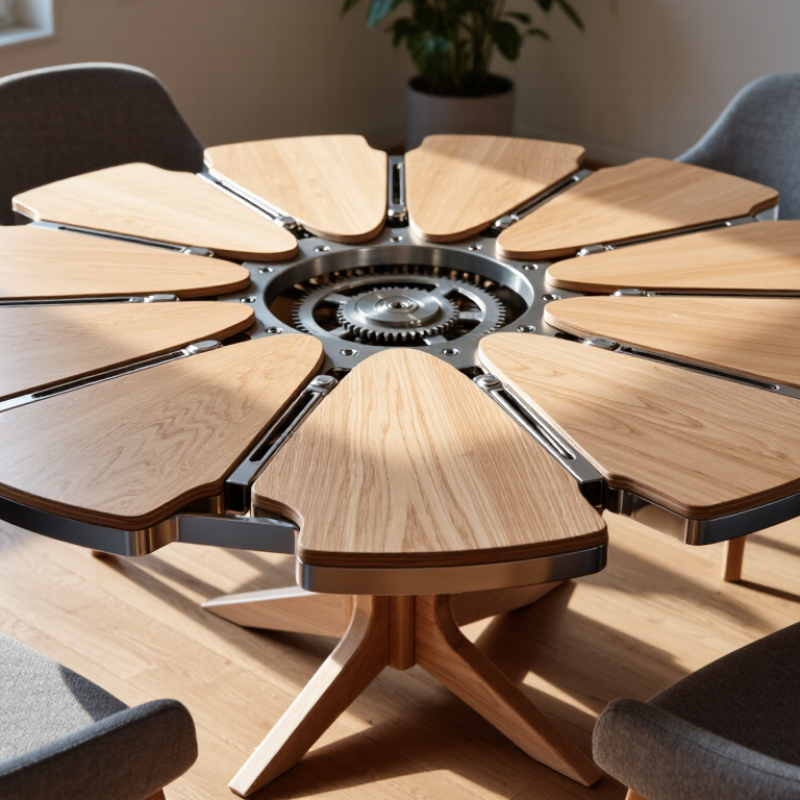
Blooming Tables are expandable tables designed to open like a flower. Their tabletop usually contains several hinged, sliding, or folding sections. When the central mechanism turns or rises, these sections move outward. The compact surface becomes larger for dining, meetings, or shared work. It is a practical idea, but the category is not perfectly standardized.

Most designs use synchronized gears, telescopic rails, pivot points, or concealed leaves. A locking system keeps each section aligned after opening. Some models need a gentle pull, while motorized versions use sensors and powered actuators. Watch the edges closely. Small gaps can reveal poor alignment, weak hardware, or incorrect installation.

This design responds to a wider furniture market focused on flexibility. Grand View Research estimated the global home furniture market at about USD 649.83 billion in 2023. Its report also projected continued growth through 2030, supported partly by changing urban lifestyles and space-conscious products. CSIL’s World Furniture Outlook 2024 similarly describes furniture demand as sensitive to housing, income, and consumer confidence. These reports do not measure Blooming Tables separately. That limitation matters.

A well-made Blooming Table should open smoothly, support its stated load, and remain stable when fully extended. Product testing, material specifications, and warranty terms offer stronger evidence than attractive videos. Real experience also exposes weaknesses: dust can affect rails, hinges may loosen, and heavy objects can strain the opening mechanism. The concept is elegant. The engineering must prove it.
What Are Blooming Tables and How Do They Work?

Definition and Purpose of Blooming Tables

A blooming table is a heavy-duty roller table used in a steel mill. It supports and moves hot steel blooms between major rolling operations. A bloom is a semi-finished steel section, usually larger than a billet. Its rectangular shape still needs further reduction and shaping.

The table works beside a blooming mill, where grooved rolls compress a heated ingot or large steel piece. Powered rollers carry the bloom forward, while reversing rolls change its direction during repeated passes. Some tables include lifting devices or transfer mechanisms. These parts reposition the steel without relying on manual handling. Water spray may cool the rollers, while sensors monitor position and movement. Heat changes everything. Scale can build on the surface and affect grip.

The purpose is practical: controlled movement, safer handling, and steady production. A well-adjusted table reduces delays between passes and helps maintain the correct rolling sequence. Operators watch roller speed, bloom alignment, surface condition, and equipment vibration. In real mills, the process is not perfectly smooth. A slightly misaligned bloom can touch a guide, lose momentum, or require a careful correction. That detail matters because a table is more than a conveyor. It is part of the mill’s timing and control system. The term can also be used loosely, so technical drawings should confirm whether it means a roller table, transfer table, or the complete handling section.

What Are Blooming Tables and How Do They Work?

Blooming tables are heavy-duty roller tables used in steel mills to move hot steel ingots and blooms into, through, and away from a blooming mill. The chart shows the calculated mass per metre for representative square bloom cross-sections, using a steel density of 7,850 kg/m³.

Main Components and Structural Design

What Are Blooming Tables and How Do They Work?

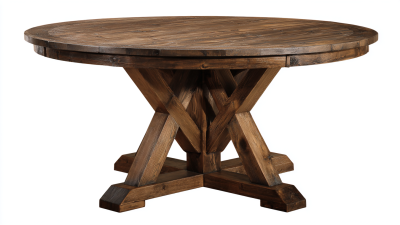
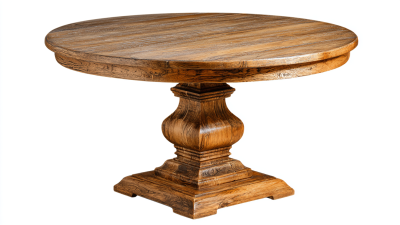
A blooming table is an expandable table designed to open like a flower. Its tabletop begins as a compact circle or oval. When activated, separate leaves rotate, slide, or rise around a central frame. This movement increases seating space without requiring a second table. The effect looks elegant, but the mechanism depends on careful engineering.

The main components include a central column, radial arms, guide rails, hinges, and locking points. Radial arms carry the leaves as they move outward. Guide rails control their path and reduce sideways movement.

Hinges allow each section to fold or rotate. A locking ring, pin, or concealed latch holds the open position securely. Underneath, support brackets distribute weight across the frame instead of concentrating pressure at one joint.

Balance matters greatly. Each leaf should align evenly, or the surface may feel unstable. Steel hardware often improves strength, while engineered wood or solid timber provides the visible structure. Small gaps are necessary for movement, especially when humidity changes the material’s size. However, excessive gaps collect crumbs and weaken the visual finish.

That is an easy detail to overlook. Regularly checking loose fasteners and cleaning the rails can prevent rough operation. In practice, blooming tables are impressive, but their smooth appearance hides demanding tolerances and maintenance needs.

How Blooming Tables Move and Position Steel Blooms

Blooming tables are heavy-duty transfer systems used in steel mills to move and position steel blooms between rolling operations. A bloom is a semi-finished steel section, often several meters long and still extremely hot. The table uses powered rollers, lifting devices, and side guides to control its route. Its job is not simply to carry steel. It must place each bloom accurately for the next pass.

As the bloom reaches the table, roller drives move it forward at a controlled speed. Hydraulic lifts can raise the bloom slightly, while cross-transfer arms or shifting rollers move it sideways toward another rolling line. Mechanical stops help establish the correct entry position. Sensors check the bloom’s presence, length, and alignment. Control software then coordinates roller speed and transfer timing. Small errors matter. A few centimeters can affect roll entry, surface quality, or production rhythm.

The working environment is severe. Heat, scale, vibration, and water spray can damage sensors and moving parts. Experienced operators watch for uneven movement, unusual noise, and delayed positioning. These signs may reveal worn bearings, blocked guides, or poor calibration. Maintenance teams inspect roller surfaces and hydraulic components regularly. Even with modern automation, the process is not perfectly predictable. A bloom can bend slightly as it cools, and that can disturb alignment. This is where practical judgment remains important. A setting that works today may need adjustment tomorrow.

What Are Blooming Tables and How Do They Work? - How Blooming Tables Move and Position Steel Blooms

System or Component Primary Function Typical Movement or Positioning Method Common Operating Data How It Supports Bloom Handling
Roller Table Transfers heated steel blooms between the reheating furnace, mill stands, transfer devices, and cooling area. Powered horizontal rotation of multiple rollers moves the bloom longitudinally. Typical roller speeds: approximately 0.2–2.0 m/s, depending on the process section. Provides continuous, controlled movement while maintaining the bloom on a defined rolling path.
Lifting Table Raises or lowers a bloom to align it with another roller table, pass line, or transfer level. Vertical motion using hydraulic cylinders, mechanical screw systems, or eccentric mechanisms. Typical vertical stroke: about 100–400 mm; exact travel depends on mill layout. Changes the bloom elevation without requiring a separate overhead lifting operation.
Walking Beam Moves blooms step by step while supporting them on stationary and movable beams. Combined lifting, horizontal traveling, lowering, and return movements. Walking pitch is commonly set to match furnace or transfer-table spacing. Reduces sliding contact and can provide accurate indexing through heating or transfer zones.
Cross-Transfer Table Moves blooms sideways from one longitudinal roller line to another. Transverse travel by movable rollers, lifting skids, chains, or hydraulic transfer arms. Transfer direction is normally perpendicular to the main rolling line. Allows routing to alternate mill strands, storage positions, inspection lines, or cooling beds.
Rotating Table Changes the orientation of a bloom before the next rolling or handling operation. Rotation around a vertical axis, usually driven by hydraulic or electromechanical equipment. Typical indexing angles include 90° and 180°, selected by the process sequence. Places the bloom in the required orientation for pass alignment and uniform deformation.
Side Guide Controls the lateral position of the bloom during transfer and entry into a rolling stand. Adjustable guide plates or arms move inward and outward across the table width. Guide clearance is adjusted to the bloom width and the required entry tolerance. Prevents excessive lateral drift and helps maintain reliable alignment with the pass line.
Pusher or Ejector Removes a bloom from the table or pushes it into a designated storage or processing position. Linear hydraulic or mechanical stroke applied from the side or end of the bloom. Stroke length is selected to exceed the required transfer distance and bloom width. Enables controlled discharge, sorting, emergency removal, and routing around unavailable equipment.
Position Sensors Detect bloom presence, position, travel limits, and table alignment. Non-contact sensing commonly uses photoelectric, inductive, or laser-based devices. Sensor locations are distributed at loading, transfer, stopping, and discharge points. Provides feedback for sequencing, interlocking, speed control, and collision prevention.
Hydraulic Drive System Supplies force for lifting, transferring, clamping, rotating, and pushing operations. Hydraulic cylinders or motors convert pressurized fluid into linear or rotary motion. Operating pressure is selected according to load, stroke, speed, and duty cycle. Delivers high force in compact equipment and allows controlled acceleration and deceleration.
Control and Interlock System Coordinates table movements and prevents unsafe or conflicting actions. Programmable logic control uses sensor feedback, motion commands, and permissive signals. Typical control functions include start, stop, inching, automatic sequencing, and fault handling. Ensures that blooms move in the correct order and that adjacent equipment is ready before transfer.
Bloom Load Represents the steel section that the table must support and move safely. Loads are carried by rollers, beams, skids, or transfer mechanisms across multiple support points. Bloom cross-sections commonly range from roughly 150 × 150 mm to more than 400 × 400 mm, depending on the mill. Determines roller spacing, drive torque, structural capacity, braking requirements, and transfer speed.
Thermal Condition Accounts for the high temperature of blooms leaving the reheating process. Heat-resistant surfaces, water cooling, insulation, and controlled contact time are used. Steel blooms may enter the rolling process at temperatures commonly above 1,000°C, depending on grade and schedule. Protects table components while preserving the temperature needed for efficient hot rolling.
The values shown are representative engineering ranges; actual table dimensions, speeds, loads, and control settings vary with mill design, bloom size, steel grade, and production schedule.

Their Role in the Blooming Mill Process

Blooming tables are heavy roller conveyors positioned around a blooming mill. They move red-hot steel ingots or blooms between the furnace, rolls, and cooling areas. In many mills, the table’s rollers turn forward or backward. This movement matches the reversing action of the mill stand.

During rolling, the table supports the steel and keeps it aligned with the roll gap. Side guides or manipulators may adjust the piece after each pass. A typical bloom can enter the rolls at about 1,100°C, depending on the steel grade and process plan.

The table must tolerate heat, scale, impact, and repeated vibration. Its surface also needs enough grip to prevent slipping. Poor alignment can create uneven passes, surface damage, or delays.

Tips:

Inspect roller wear, guide position, and drive response before production. Watch the bloom’s entry angle, not only its speed. Small deviations become obvious after several passes. Operators should also check for scale buildup between rollers. In practice, the ideal table speed is not always obvious. It changes with section size, temperature loss, and rolling reduction. A setting that works for one bloom may perform poorly on another. That uncertainty deserves attention. Recording pass times and visible defects helps engineers refine future schedules. Safety interlocks and guarding require regular verification, because heat and moving steel leave little room for assumptions.

Common Applications and Operational Advantages

A blooming table is a heavy-duty roller conveyor used in a blooming mill. It moves heated steel ingots or blooms between the furnace, rolling stands, and cooling areas. Powered rollers control direction, spacing, and speed. Guides help keep each piece centered during repeated passes. The system must tolerate severe heat, scale, vibration, and impact.

Its main application is primary steel shaping. Blooms later become rails, structural sections, bars, or seamless-tube feedstock. The World Steel Association reported approximately 1.89 billion tonnes of crude steel production in 2023. That volume shows why dependable material handling matters. A well-designed blooming table reduces crane movements, limits waiting time, and supports a steadier rolling rhythm. It can also improve operator safety by keeping personnel away from moving hot metal. In practice, the result is not always perfect. Misaligned blooms, roller wear, and scale buildup can still create delays. Maintenance quality decides much of the real benefit.

Tips: Specify roller load, surface temperature, transfer speed, and bloom dimensions before installation. Include accessible inspection points and temperature-resistant seals. Monitor motor current and roller vibration. These signals can reveal overloads earlier than visible damage. The International Energy Agency identifies steelmaking as responsible for roughly 7% to 9% of global energy-related carbon dioxide emissions. Better table control cannot solve that challenge alone, but fewer stoppages and smoother transfers may reduce wasted heat and energy. Performance should be measured with downtime, transfer accuracy, maintenance hours, and yield—not speed alone.