How to Choose Desk Tidy Drawers for Global Buyers in 2026

Choosing Desk Tidy Drawers in 2026 requires more than comparing prices and attractive product photos. Global buyers must examine capacity, materials, drawer movement, packaging strength, and supplier consistency. A compact drawer unit may look suitable online, yet fail when its base flexes under stationery, cables, and small tools. Details matter.

Professional organizer and author Julie Morgenstern offers a useful perspective: “Organizing is not about getting rid of everything you own or trying to become a different person.” This idea applies directly to Desk Tidy Drawers. The right product should support real working habits, not force users into an unrealistic system. A designer may prefer open compartments, while a shared office may need covered drawers for privacy and dust control.

This guide explores practical buying factors for international purchasers in 2026. It considers drawer dimensions, smoothness, handle design, stability, recyclable materials, color choices, and protection during long-distance shipping. Supplier communication also deserves attention. Clear specifications, sample testing, production photographs, and consistent quality checks can prevent expensive surprises.

Still, no checklist guarantees a perfect purchase. That assumption needs testing. Some buyers may overvalue appearance and overlook drawer alignment. Others may choose the lowest quote and discover weak packaging later. The better approach combines measurable standards with hands-on evaluation. Open every drawer. Check the corners. Test the weight. Then ask whether the product truly fits the intended desk, market, and daily routine.

How to Choose Desk Tidy Drawers for Global Buyers in 2026

Define Desk Tidy Drawers and Their Main Uses

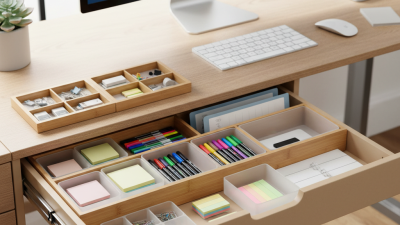
Desk tidy drawers are compact storage units designed to sit beneath, beside, or on a desk. They usually contain shallow drawers for stationery, documents, cables, and small tools. Unlike filing cabinets, they keep frequently used items within arm’s reach. The design may include handles, dividers, locks, or removable trays. For global buyers, the product should also support different desk sizes, working habits, and office layouts.

Their main use is controlling visual clutter without removing essential items from the workstation. A 2024 Global Workplace Survey by the Gensler Research Institute reported that employees spend about 62% of their working time at individual workstations. This makes nearby storage important for daily efficiency. A desk tidy drawer can hold pens, chargers, notebooks, receipts, and adapters in separate zones. It can also reduce repeated trips to shared storage. Small details matter.

Material choice affects durability, weight, and shipping costs. Metal suits intensive office use, while engineered wood may offer a warmer appearance. Plastic can reduce weight, but brittle hinges remain a common weakness. Buyers should test drawer movement, load capacity, safety stops, and surface resistance. The 2023 Global Office Furniture Market analysis by Grand View Research identified growing demand for flexible and space-efficient workplace furniture. Yet storage alone cannot repair a poor workflow. Some drawers become hidden junk boxes. That risk deserves honest attention. Clear labels and adjustable dividers help, but user habits still decide the result.

Assess Workspace Needs, Storage Capacity, and Drawer Size

How to Choose Desk Tidy Drawers for Global Buyers in 2026

Choosing desk tidy drawers starts with the workspace, not the product photo. Measure the available width, depth, and clearance beneath the desktop. A drawer unit should leave enough legroom for comfortable movement. Steelcase’s Global Report on Hybrid Work found that 87% of employees want more control over where and how they work. Flexible storage supports that preference, especially in shared offices and home workstations.

Assess daily storage needs carefully. Separate small items, documents, cables, and stationery before selecting drawer capacity. A three-drawer unit may suit pens and notebooks, but it can fail when folders become part of the routine. Check internal dimensions, not only external size. For global purchasing, compare measurements in millimetres and inches. Confirm the tested load rating, drawer extension, handle clearance, and assembly requirements. A tidy drawer is not automatically a useful drawer. I sometimes overestimate storage needs.

Tips: Keep frequently used items in the top drawer. Store heavier supplies lower. Leave 15–20% empty space for future needs. Test the drawer with real objects, such as a stapler, A4 folders, and charging cables. The 2024 Global Workspace Survey from Gensler Research Institute highlights the continuing importance of adaptable work settings. This makes modular drawer sizes valuable, although adaptability can increase cost and visual clutter. Choose capacity that matches actual habits, not an imagined perfect desk.

Compare Materials, Designs, Security Features, and Durability

When choosing desk tidy drawers for global buyers in 2026, material affects weight, care, and service life.
Powder-coated steel handles daily filing well and resists surface scratches. Bamboo feels warmer, but it needs careful sealing in humid offices. Recycled plastic is light and easy to clean, although cheaper grades may flex under heavy stationery. Check wall thickness, drawer joints, and the stated load rating.

Design should match real desk habits, not showroom appearances. Full-extension runners make the rear space usable. Smooth stops prevent drawers from striking nearby equipment. Modular sections suit mixed supplies, while compact drawers save valuable desktop space.

Measure the desk opening, cable routes, and user reach before ordering. A small mistake here can create constant frustration.

Security features need practical judgment. Basic lock may protect confidential notes from casual access, but it is not a high-security solution. Look for concealed cylinders, replaceable keys, and reinforced drawer fronts. Ask for cycle-test results, corrosion testing, and packaging details before approving a shipment. I once overlooked humidity exposure during a sample review; the runners later became stiff. That error changed my checklist. Buyers should also inspect assembly tolerances, spare-part availability, and warranty terms across regions. Durability is more than a thick shell. It depends on materials, hardware, handling, and daily use. Feel the slide action. Check the corners. Do not trust photographs alone.

Check Global Standards, Packaging, Shipping, and Import Requirements

How to Choose Desk Tidy Drawers for Global Buyers in 2026

Global buyers should check product standards before comparing prices. Desk tidy drawers may contain plastic, metal, wood, coatings, or mixed materials. Ask suppliers for material declarations, test reports, and clear dimensions. Safety checks should cover sharp edges, drawer stability, small detachable parts, and chemical restrictions in the destination market. Requirements vary by country. Do not assume one certificate works everywhere.

Packaging affects both cost and customer experience. A sample shipment can reveal weak corners, loose handles, or moisture damage. Use inner protection, strong cartons, and visible carton markings. Drop testing is useful, but it cannot copy every warehouse condition. I once trusted a neat sample package that failed during a humid sea shipment. That mistake changed our packing checklist.

Tips: Confirm the HS code with a qualified customs adviser. Request the commercial invoice, packing list, origin details, and transport documents before production. Check carton weight, pallet size, and container loading plans. Leave space for inspection labels and local language information when required. Ask whether the packaging can be recycled in the destination market. Small details matter. Also verify import duties, product taxes, and restricted-material rules with the buyer’s customs broker. Estimates can be wrong when product materials change, so review them again before shipment.

Select Suppliers, Evaluate Costs, and Confirm Product Quality

Choosing desk tidy drawers for global markets requires more than comparing catalogue photos. Supplier selection should begin with production evidence. Ask for factory capacity, material sources, quality procedures, and recent sample records. A reliable supplier explains drawer dimensions, load limits, surface finishes, and packaging methods clearly. Vague answers deserve caution.

Compare the full landed cost, not only the unit price. Include tooling, sample charges, packaging, freight, duties, inspection, and possible replacement costs. Small drawers can occupy surprising carton space. Request carton dimensions and stacking details before calculating freight. A low price may hide weak runners or excessive damage during transport. Check minimum order quantities and payment terms too. Keep the figures in one shared spreadsheet.

Product quality needs hands-on confirmation. Test several drawers with pens, clips, cables, and heavier office items. Open each drawer repeatedly. Look for uneven gaps, sharp edges, loose handles, and sticking movement. Measure key parts against the approved sample. Independent inspection can reduce risk, but it cannot replace clear specifications. A useful quality checklist may still miss user habits. People overload drawers. They also pull them sideways. Packaging should protect corners and moving parts during handling. Country-specific import and labeling requirements should be checked before production. Mistakes happen, even with experienced buyers. Record every change in writing, because memory is a poor quality-control system.

How to Choose Desk Tidy Drawers for Global Buyers in 2026 - Select Suppliers, Evaluate Costs, and Confirm Product Quality
Evaluation Area Key Metric Indicative 2026 Benchmark Buyer Verification Method Commercial or Quality Impact
Product Design Drawer configuration Two to five drawers; common formats include 2+1, 3-drawer, and 5-drawer units. Confirm drawer count, internal dimensions, handle design, and intended use in the technical drawing. More drawers and moving parts usually increase assembly time, packaging volume, and unit cost.
Product Design External footprint Approximately 180–320 mm wide, 150–280 mm deep, and 100–260 mm high for desktop models. Measure the approved sample and compare it with the buyer’s available desk space and shipping carton plan. A compact footprint improves shelf efficiency and can reduce dimensional freight charges.
Materials Main body material Common options are ABS or PP plastic, steel sheet, bamboo, MDF, or combinations of these materials. Request a material declaration, confirm material thickness, and check the construction against the approved sample. Plastic generally supports lower weight and higher volume production; metal and bamboo may provide a more premium appearance.
Materials Plastic wall thickness About 1.5–3.0 mm for injection-molded desktop organizers, depending on design and load requirements. Check the cross-section on the drawing or use a thickness gauge on production samples. Insufficient thickness can cause warping, cracking, or poor drawer alignment.
Function Drawer operation Drawers should open and close smoothly without binding, excessive side play, or accidental detachment. Perform repeated opening and closing tests on samples from different production lots. Reliable movement reduces returns, complaints, and negative marketplace reviews.
Function Load capacity A practical target is approximately 0.5–1.5 kg per drawer for stationery and small office accessories. Place the specified test load in each drawer and inspect deformation, cracking, and smooth operation. Higher load requirements may require reinforced runners, thicker panels, or metal components.
Safety Stability and tipping resistance The unit should remain stable during normal drawer use and should not tip when a loaded drawer is opened. Test the product on a level surface with the heaviest practical drawer configuration fully extended. Wide bases, anti-slip feet, and controlled drawer travel improve safety and user confidence.
Safety Edges and surface condition Edges should be smooth, burr-free, and free from sharp points, cracks, exposed staples, or splinters. Conduct visual inspection and run a soft cloth over all accessible edges and corners. Good edge finishing lowers injury risk and improves perceived quality.
Finish Color and appearance consistency Color variation should remain within the buyer-approved master sample or agreed color tolerance. Compare production samples under consistent lighting and record approval against a signed color standard. Consistent color is particularly important for multi-country retail listings and coordinated office sets.
Supplier Selection Supplier production capability Prefer suppliers with relevant molding, metal forming, woodworking, or assembly capacity matching the product design. Review factory photos, process flow, equipment list, quality records, and a recent production sample. Capability matching reduces outsourcing risk, delays, and inconsistent component quality.
Supplier Selection Minimum order quantity Typical starting quantities may range from 300–1,000 units for standard designs and 1,000–5,000 units for customized designs. Obtain written MOQ details for standard color, custom color, logo, packaging, and tooling requirements. Lower MOQs reduce inventory exposure but may carry higher unit prices or setup charges.
Supplier Selection Sample and tooling policy Request a pre-production sample; custom molds may require a separate one-time tooling charge. Confirm sample lead time, tooling ownership, revision policy, and whether the sample fee is refundable. Written sample approval creates a reference point for production inspection and dispute resolution.
Lead Time Production schedule Standard products often require approximately 15–30 days after order confirmation; customized products may require 30–60 days. Ask for a stage-by-stage schedule covering material preparation, production, inspection, packing, and dispatch. Longer schedules should be included in launch planning, seasonal demand forecasts, and safety-stock calculations.
Cost Evaluation Indicative product price Basic plastic desktop drawer units commonly fall around USD 1.50–5.00 per unit at volume; premium materials and complex designs cost more. Compare like-for-like quotations using the same material, dimensions, accessories, packaging, quantity, and delivery term. A low quoted price may exclude packaging upgrades, testing, tooling, inspection, or export documentation.
Cost Evaluation Packaging cost Allow approximately USD 0.20–1.50 per unit for standard protective packaging, depending on carton structure and inserts. Request carton dimensions, gross weight, packing quantity, drop protection, and print requirements. Better packaging can reduce transit damage but may increase material use and dimensional weight.
Cost Evaluation Landed-cost formula Landed cost = product price + packaging + inland transport + freight + insurance + duties + taxes + inspection fees. Build a destination-specific cost sheet rather than comparing product prices alone. This provides a more accurate comparison between suppliers and sourcing countries.
Quality Control Pre-shipment inspection Use an agreed inspection plan covering appearance, dimensions, function, packaging, quantity, and labeling. Define acceptable quality limits before production; a commonly used general inspection level is AQL 2.5 for major defects and AQL 4.0 for minor defects, subject to buyer agreement. Pre-shipment checks help identify defects before goods are released and shipped internationally.
Quality Control Dimensional tolerance For many small molded or assembled units, a practical starting tolerance is approximately ±1–2 mm unless tighter control is specified. Measure length, width, height, drawer clearance, and key mounting points using calibrated tools. Clear tolerances reduce disputes and help ensure compatibility with retail packaging and desk layouts.
Quality Control Durability testing Test drawer cycling, load retention, base stability, surface adhesion, and packaging drop resistance according to the product risk level. Record test method, sample quantity, load, cycle count, acceptance criteria, and test results. Documented testing supports consistent production and provides evidence for corrective action.
Regulatory Readiness Material and chemical documentation Maintain material declarations and request applicable test reports for plastics, coatings, adhesives, inks, and packaging. Check requirements for every destination market and ensure documents match the actual production materials. Documentation helps prevent customs delays, restricted-substance issues, and retailer compliance problems.
Sustainability Packaging and material efficiency Prioritize recyclable packaging, reduced empty space, durable components, and clearly identified material types where practical. Review packaging composition, recycled-content claims, recyclability information, and supplier evidence. Efficient packaging can reduce freight volume and support sustainability requirements from global buyers.
Final Approval Golden sample and change control Keep one signed reference sample and an approved specification sheet for every color and configuration. Require written approval before any change to material, mold, component, color, packaging, or production location. Change control protects consistency across repeat orders and different destination markets.
Note: Cost, MOQ, lead-time, and freight figures are indicative procurement benchmarks for planning purposes. Actual results vary by design complexity, order quantity, production location, destination, Incoterm, testing scope, and seasonal capacity.