What Are the Top 10 Rustic Farm Table Styles?

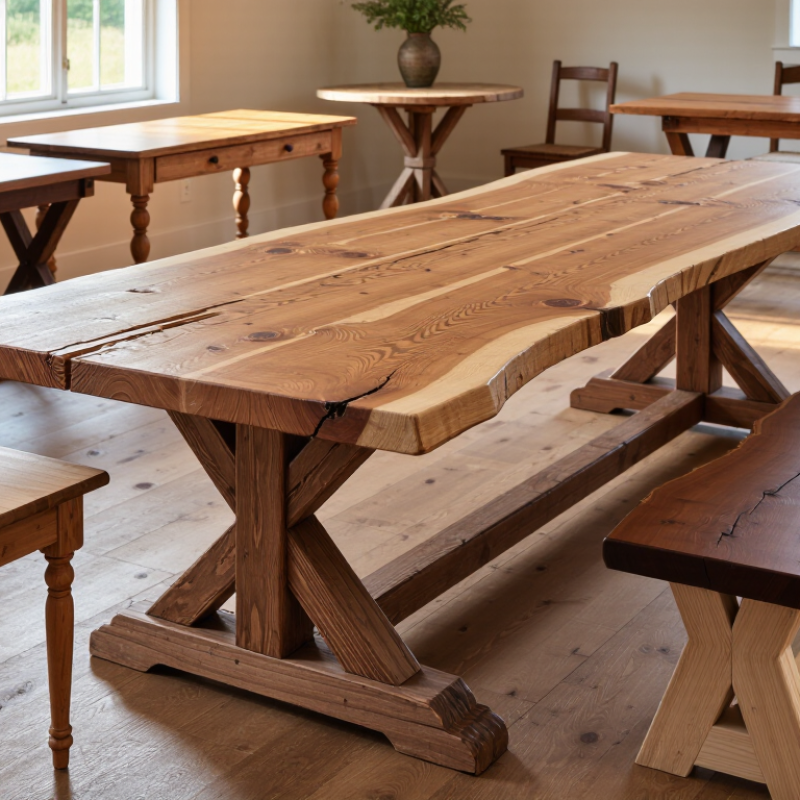
A Rustic Farm Table brings warmth, history, and practical character into a dining space. Its wide top may show oak knots, saw marks, softened corners, or uneven grain. These details are not flaws alone. They can record how the wood was shaped and finished.

This guide explores ten Rustic Farm Table styles, from traditional trestle designs to farmhouse refectory tables, turned-leg models, and modern reclaimed-wood versions. Each style changes the room’s mood. A trestle base feels sturdy and communal. A pedestal table creates more legroom. A reclaimed top adds visible history, though its surface may require extra care. Measurements matter, too. A table can look beautiful online but feel cramped beside dining chairs.

William Morris, a major voice in furniture and interior design, offered a useful standard: “Have nothing in your house that you do not know to be useful, or believe to be beautiful.” That principle suits rustic dining furniture. A table should serve daily meals, not merely imitate an old workshop piece. Look closely at joinery, wood movement, finish quality, stability, and repair options. Ask whether the maker explains the timber’s origin and construction clearly. Trust the details.

No style wins every room.

This overview is practical, but not perfect. Personal taste, floor space, and household habits can change the best choice. A heavily distressed table may feel authentic to one buyer and unfinished to another. The right Rustic Farm Table balances honest materials, comfortable proportions, dependable craftsmanship, and the quiet marks of real use.
What Are the Top 10 Rustic Farm Table Styles?

Defining the Essential Features of Rustic Farm Tables

Rustic farm tables share a practical, lived-in character across many styles. Wide wooden planks, visible grain, and modest imperfections create their strongest visual identity. Reclaimed, oak, pine, and walnut can all work well when properly dried and joined. The wood should feel substantial, not merely distressed for decoration.

Strong construction matters more than surface appearance. Trestle bases, turned legs, and simple rectangular frames are common choices. Reliable joinery keeps the top stable as humidity changes. A slight gap between boards may add charm, but excessive movement signals poor preparation. I have found that a tabletop around 30 inches high feels comfortable for most dining chairs. Its edges should be softened slightly, especially in homes with children.

A durable finish protects the grain while preserving a natural touch. Matte oil, hardwax, or low-sheen water-based coatings can reduce stains without making the table look plastic. Test the finish on hidden wood first. Rustic does not mean careless. Loose knots, uneven boards, and old nail marks can add history, but they should not create sharp edges or weak spots. I once preferred a heavily weathered surface, then discovered it collected crumbs constantly. That choice looked authentic, yet performed poorly. The best rustic table balances irregular texture with dependable daily use. It should welcome plates, elbows, spills, and years of repair without losing its quiet farmhouse character.

What Are the Top 10 Rustic Farm Table Styles? - Defining the Essential Features of Rustic Farm Tables

Style Defining Features Common Wood Choices Typical Tabletop Base and Leg Design Typical Seating Best Interior Setting Maintenance Level
Classic Plank Farmhouse Wide, solid-looking boards, visible grain, a straightforward rectangular profile, and a warm, practical appearance. Oak, pine, maple, or reclaimed hardwood 1.5–2.5 in (4–6 cm) visual thickness Square or tapered legs with a simple apron 6–10 people Traditional kitchens, dining rooms, and country homes Low to moderate
Reclaimed Wood Farm Table Aged boards, nail holes, color variation, knots, saw marks, and naturally distressed character. Reclaimed pine, oak, chestnut, or mixed hardwood 1–2.5 in (2.5–6 cm) Simple trestle, square, or turned-leg base 6–12 people Industrial-rustic, lodge, and vintage-inspired spaces Moderate
Trestle Farm Table Two substantial supports connected by a stretcher, providing generous legroom along the long sides. Oak, ash, pine, or walnut 1.25–2.5 in (3–6 cm) End trestles joined by a central or lower stretcher 6–12 people Large family dining rooms and open-plan kitchens Low
X-Leg Farm Table Crossed supports create a strong visual silhouette and add a handcrafted, architectural detail. Oak, pine, cedar, or reclaimed timber 1.25–2 in (3–5 cm) Paired diagonal legs forming an X at each end 6–10 people Modern rustic dining rooms and casual entertaining areas Low to moderate
Turned-Leg Farm Table Decoratively shaped legs combine traditional craftsmanship with a sturdy, welcoming tabletop. Maple, oak, pine, or cherry 1.25–2 in (3–5 cm) Rounded or turned legs with a framed apron 6–10 people Classic country, cottage, and heritage-style interiors Moderate
Live-Edge Farm Table One or both long edges retain the tree’s natural contour, highlighting organic grain and irregular shape. Walnut, maple, elm, oak, or acacia 1.5–3 in (4–8 cm) Metal, slab-style, trestle, or simple wooden legs 4–10 people Contemporary rustic, organic modern, and lodge settings Moderate to high
Extension Farm Table A practical farmhouse form with removable or built-in leaves that increase seating capacity when needed. Oak, maple, pine, or rubberwood 1–2 in (2.5–5 cm) Four legs or trestle base with an extendable frame 6–14 people Multi-purpose dining rooms and homes that host guests Moderate
Two-Tone Farm Table Contrasting finishes or materials distinguish the tabletop from the base while preserving a relaxed rustic feel. Oak, pine, maple, or mixed hardwood 1.25–2 in (3–5 cm) Painted or stained legs paired with a natural wood top 4–10 people Farmhouse kitchens, cottage interiors, and casual dining spaces Moderate
Rustic Industrial Farm Table Rough or reclaimed wood is paired with visible metal details, creating a balanced blend of utility and warmth. Reclaimed pine, oak, elm, or acacia 1.25–2.5 in (3–6 cm) Steel trestles, U-legs, hairpin legs, or boxed metal frames 4–10 people Loft apartments, modern rustic homes, and converted spaces Low to moderate
Round or Oval Farm Table A softer silhouette encourages conversation and improves circulation in compact or centrally arranged dining areas. Oak, pine, maple, ash, or walnut 1–2 in (2.5–5 cm) Central pedestal, four legs, or a compact trestle base 4–8 people Small dining rooms, breakfast areas, and open kitchens Low to moderate

Comparing the Top 10 Rustic Farm Table Styles

Comparing the Top 10 Rustic Farm Table Styles

The ten leading rustic farm table styles differ in structure, comfort, and maintenance. Trestle tables offer strong legroom and suit long family rooms. Pedestal tables remove corner legs, helping smaller dining spaces feel less crowded. Sawbuck tables look lighter, but their braces can limit foot placement. Refectory tables create a historic, communal mood through thick tops and narrow ends. Plank-top tables show visible grain, knots, and occasional gaps. Live-edge tables feel closest to the tree, though every edge varies. Harvest tables provide generous depth for serving dishes. Turned-leg tables add craft detail without excessive ornament. Distressed painted tables hide minor marks well. Extension farmhouse tables provide the most practical flexibility.

Real use exposes differences. A 200-centimeter trestle table seats six comfortably, while a 240-centimeter version supports larger gatherings. Live-edge designs need careful chair placement. Pedestal bases work better with mixed seating. Looks matter. The National Kitchen and Bath Association’s 2024 Kitchen Trends Report identifies transitional design as a leading preference, supporting rustic tables with cleaner proportions. Rustic does not mean visually heavy.

Material data also deserves attention. The U.S. Environmental Protection Agency reports that furniture and furnishings contribute to household waste streams, making durability important. A repairable solid-wood table may outlast a cheaper composite alternative. This comparison is not perfect. Wood movement, uneven floors, and imperfect joinery can change daily comfort. My practical ranking favors trestle, pedestal, and extension styles for versatility, while live-edge and refectory tables win for character. Houzz’s 2024 Kitchen Trends Study also reports strong demand for functional storage, reminding buyers that beauty must still support real household routines.

Examining Materials, Joinery, and Surface Finishes

What Are the Top 10 Rustic Farm Table Styles?

The ten strongest rustic farm table styles include plank-top, trestle, refectory, harvest, Parsons, pedestal, turned-leg, wagon-wheel, draw-leaf, and farmhouse extension tables. Their differences appear in material choice and joinery. Reclaimed oak offers dents, knots, and uneven color. Ash creates a lighter, cleaner surface. Pine costs less, but it marks quickly. Wide boards need breadboard ends, floating fasteners, or elongated screw holes. These details allow seasonal movement. Mortise-and-tenon joints suit heavy trestle bases, while dowels work well for lighter frames. Simple construction is not always weak.

The USDA Forest Products Laboratory’s Wood Handbook identifies roughly 6–8% moisture content as typical for interior wood in many American climates. A builder should measure boards before assembly. That small step prevents cracked tops and loose joints. Still, climate changes the result. A dry winter room can shrink a broad tabletop noticeably. I would not treat one moisture range as universal. That assumption needs checking.

Surface finishes shape both appearance and maintenance. Hardwax oils preserve visible grain and create a soft, repairable sheen. Water-based coatings dry faster and usually add less amber color. Film finishes resist spills better, but scratches can look harsh on dark wood. A 2023 industry market report from Grand View Research estimated continued growth in global furniture demand, yet market size says little about table durability. Workshop testing matters more. Rub a damp cloth across the finish. Place a warm plate nearby. Rustic charm should survive ordinary family use. Not every scar is beautiful.

Matching Each Table Style to Different Dining Spaces

What Are the Top 10 Rustic Farm Table Styles?

Matching Each Table Style to Different Dining Spaces

A trestle table suits a long dining room because its open base keeps chairs flexible. A turned-leg table adds cottage character to a compact breakfast nook. Choose a farmhouse plank table for large kitchens with exposed beams and wide walkways. A refectory table works best in narrow rooms, especially with bench seating along one wall. The 2024 Houzz U.S. Kitchen Trends Study reports that 76% of renovating homeowners upgrade their kitchen islands. That figure supports choosing tables that improve circulation rather than crowd it.

A harvest table fits casual family dining and welcomes uneven wood grain. A pedestal table gives small square rooms better legroom. A rustic Parsons table offers cleaner lines for modern apartments. A live-edge table becomes a focal point in open-plan spaces, but its irregular edge can reduce usable seating. An extension table helps flexible dining rooms handle guests without permanent bulk. A picnic-style table suits covered outdoor dining, provided the finish tolerates moisture. Practical experience matters here: measure chair clearance, not just tabletop length. Measurements still win.

The NKBA 2024 Kitchen Trends Report continues to identify natural materials and warmer wood tones as strong design preferences. Still, rustic does not mean oversized. Allow about 36 inches between the table edge and nearby walls for comfortable movement. I once favored a dramatic live-edge slab in a small room; it looked beautiful, but daily seating became awkward. That mistake is worth remembering. Check door swings, lighting placement, and chair width before choosing the most attractive style.

Evaluating Durability, Maintenance, and Design Value

Rustic farm tables create value through structure, not decoration alone. The ten strongest styles are trestle, classic plank, reclaimed-beam, refectory, harvest, turned-leg, pedestal, drop-leaf, extension, and bench-set farmhouse. Trestle and refectory tables usually distribute weight effectively. Pedestal designs improve legroom. Drop-leaf and extension styles serve smaller rooms well. Turned legs add charm, but their joints need careful inspection. Reclaimed beams look distinctive, though hidden cracks can weaken them.

The USDA Forest Products Laboratory Wood Handbook identifies approximately 6–8% moisture content as a common indoor range for wood in many heated spaces. Climate changes that result. A tabletop beside a radiator may still cup. That matters more than a thick finish. Use coasters, wipe spills quickly, and inspect joints every few months. Oil-finished tops require periodic renewal, while film finishes resist stains better but can show scratches sharply. My practical mistake was treating “distressed” wood as maintenance-free. It is not.

Design value also depends on daily use. The 2024 Houzz U.S. Kitchen Trends Study reported that 76% of renovating homeowners included a kitchen island. That finding supports tables designed for gathering, preparation, and storage. Extension and bench-set styles suit busy households, while harvest and reclaimed-beam tables favor visual character. The National Wood Flooring Association advises controlling indoor humidity to reduce wood movement; similar care benefits farm tables. Finish quality helps, but proportion matters more. A beautiful table that blocks circulation loses value quickly.