10 Tips for Choosing Sweater Storage Bins

Choosing the right Sweater Storage Bins can protect knitwear, save closet space, and reduce daily frustration. Yet the prettiest container is not always the most practical. A deep fabric bin may look attractive, but it can collapse under heavy wool sweaters. A rigid plastic box may stack well, but poor ventilation can encourage stale odors.

Professional organizer Julie Morgenstern offers a useful principle: “Organizing is not about getting rid of everything you own or trying to become a different person.” Her advice supports a thoughtful approach to sweater storage. Your bins should match your clothing volume, closet dimensions, climate, and routine.

Measure first.

That small step prevents expensive mistakes. Check shelf width, opening height, and bin depth before buying. Then consider breathable materials, sturdy handles, secure lids, and smooth interiors that will not snag delicate fibers. Clear labels also matter, especially when winter clothing stays stored for several months.

Real storage decisions are rarely perfect. A bin that works beautifully in one apartment may fail in a humid laundry room. I have seen shoppers focus on appearance and overlook weight limits. That choice often creates leaning stacks and crushed sweaters. The best solution balances protection, access, airflow, and price.

These ten tips for choosing Sweater Storage Bins will help you compare those details clearly. They also encourage a short review of your habits. Do you fold sweaters loosely? Do you rotate seasonal clothing? Do you need daily access? Honest answers lead to storage that works beyond the product photo.
10 Tips for Choosing Sweater Storage Bins

Define Your Sweater Storage Needs and Available Space

Before buying sweater storage bins, measure the sweaters and the place they will occupy. A closet shelf may look generous, yet folded knitwear needs breathing room. Record the shelf width, depth, and vertical clearance with a tape measure. Then count bulky wool, thin cotton, and seasonal pieces separately. I once measured only the shelf opening. The bins fit, but the lid pressed against the sweaters.

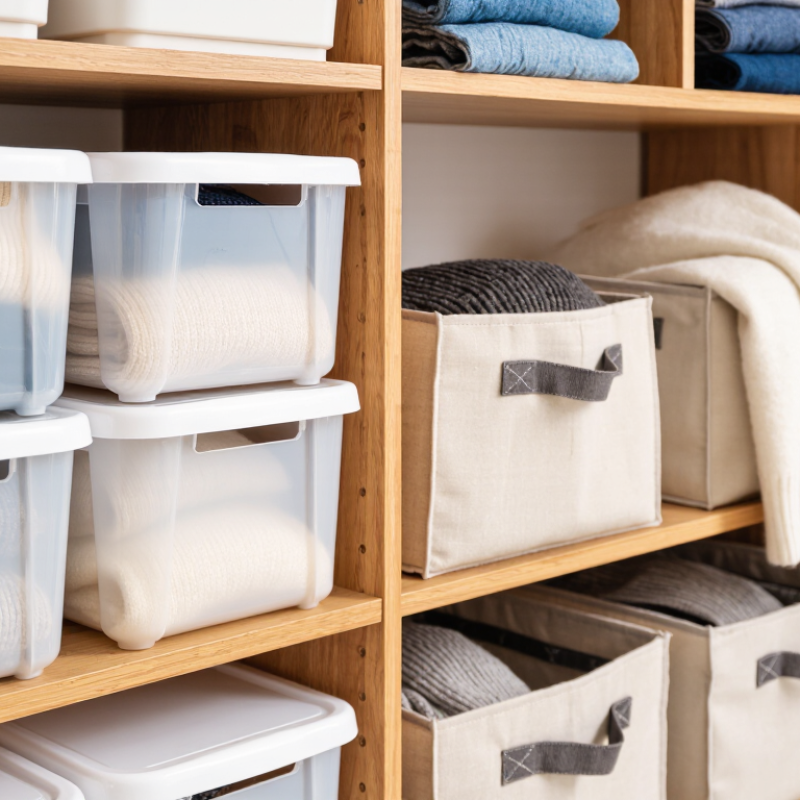
Your storage needs depend on access, not only volume. If you wear a sweater weekly, choose a bin that slides out easily and stays visible. For off-season items, a lidded container can reduce dust, light exposure, and accidental snagging. Leave a little empty space. Compression may create deep creases and flatten textured stitches. A useful working limit is filling each bin about three-quarters full, allowing garments to fold without force. This is not a perfect rule; thick cables and delicate fibers need more room.

Check the room before choosing materials. A damp basement, warm attic, or sunny window changes the risk of mildew, odor, and fading. In humid areas, keep bins raised from the floor and inspect them every few months. Ventilation matters, but open storage can collect dust. I prefer clear labels, not necessarily clear bins, because light can affect some fibers over time. Review your plan after one season. You may discover that the smallest bin is hardest to lift.
Choose the Right Bin Size, Shape, and Storage Capacity

10 Tips for Choosing Sweater Storage Bins

Choose the Right Bin Size, Shape, and Storage Capacity

Choosing sweater storage bins becomes easier when size, shape, and capacity match your actual wardrobe. Measure the shelf before shopping, including its depth, height, and clearance beneath doors. A bin that fits tightly may waste space when sweaters swell. Leave two centimeters around each side for easier pulling and better airflow. Fold one typical sweater, then measure its packed height. Use that sample instead of guessing. Bulky knits need deeper bins, while thin cotton sweaters fit lower containers. Capacity matters more than a large label.

For a narrow closet, rectangular bins usually use vertical space better than round or tapered shapes. A cube can work on open shelving, but it may leave awkward gaps. Test the opening with your hand. You should lift the bin without scraping neighboring shelves or crushing folded fabric. Clear fronts help identify colors and textures, yet transparent plastic can expose sweaters to light. Opaque fabric may protect appearance, but check whether it holds its shape. I once chose a tall container that looked efficient; its narrow opening made retrieval frustrating.

Capacity Choose capacity by season, not by the maximum number printed on packaging. A bin holding six light sweaters may hold only three thick wool pieces. Store only clean, fully dry sweaters to reduce odor and moisture problems. Avoid overfilling, because compressed folds develop stubborn creases. Keep heavier knits low, and place frequently worn items near the front. Handles should feel secure under the planned load, especially on high shelves. Check seams and base stiffness before storing anything. A smaller bin often encourages better rotation, although I still misjudge winter volume sometimes. That mistake is useful.

Compare Materials, Ventilation, and Protection Features

10 Tips for Choosing Sweater Storage Bins

Compare Materials, Ventilation, and Protection Features

A sweater bin should match the fabric, room, and storage period. For wool and cashmere, choose food-safe, odorless polypropylene or cotton canvas. Avoid untreated cardboard in damp rooms. Textile Exchange’s Materials Market Report 2024 states that polyester made up about 57% of global fiber production in 2023, but synthetic sweaters still need airflow. Fabric type does not remove moisture risk.

Choose a rigid bin with smooth inner walls, a secure lid, and rounded edges. Look for ventilation openings covered with fine mesh. These openings reduce stale air without inviting dust. The U.S. Environmental Protection Agency recommends drying wet materials within 24–48 hours to limit mold growth. Do not seal a damp sweater. I once stored one too quickly and found a musty smell weeks later. That mistake was avoidable.

Prefer translucent sides for quick inspections, but keep bins away from direct sunlight. The Canadian Conservation Institute recommends clean, dark, stable storage for textiles. Add breathable dividers, avoid overpacking, and leave space around folded sleeves. Stackable designs save room, yet excessive weight can flatten knitwear. Check handles, hinges, and lid pressure before buying. A small hygrometer helps monitor the closet; aim for moderate, stable humidity rather than chasing a perfect number. Inspect every few months. Storage systems need adjustment.

10 Tips for Choosing Sweater Storage Bins

Compare materials, ventilation, and protection features using this practical 1–5 suitability score. Higher scores indicate better performance for storing sweaters in typical indoor conditions.

How to read the chart: Fabric bins are breathable and gentle but offer less moisture and pest protection. Plastic bins provide stronger dust and moisture resistance, while ventilated polypropylene bins offer a balanced combination of airflow, durability, and protection. Use clean, completely dry sweaters and avoid compressing natural fibers for long periods.

Evaluate Accessibility, Stacking, and Labeling Options

Choosing sweater storage bins is less about appearance and more about daily access. The 2023 IKEA Life at Home Report surveyed over 37,000 people across 38 countries. It found that feeling in control of home spaces supports wellbeing. A bin that requires moving six others fails that test. Choose clear or open-front containers for frequently worn sweaters. Place seasonal knits higher, but keep them within safe reaching distance.

Tip 1: Test access before buying several bins. Pull one from a full shelf using one hand. If the lid catches, the bin is too deep. A 30–40 centimetre depth often suits standard wardrobe shelves, but measure first. The Container Store Industry Report and professional organizers commonly stress measuring the storage space before purchasing. That practical step prevents wasted capacity. I still prefer slightly smaller bins when shelves are crowded.

Tip 2: Check stacking stability, not just advertised weight. Reinforced corners, flat lids, and matching dimensions reduce shifting. Leave a small clearance above each bin.

Tip 3: Label two sides, not one. Use large, washable labels with categories such as “wool,” “casual,” or “winter.” The U.S. Environmental Protection Agency reports that millions of tons of textiles enter municipal waste streams annually. Better visibility may help people wear and keep garments longer. However, labels can become inaccurate after a wardrobe change. Review them each season.

Set a Budget and Select Durable Storage Bins

10 Tips for Choosing Sweater Storage Bins

Set a Budget and Select Durable Storage Bins

A practical budget prevents attractive bins from consuming your entire storage plan. I usually measure the shelf first, then price each usable liter of capacity. Cheap plastic can crack under stacked sweaters, especially in cold garages or damp closets. I once saved money on thin containers and replaced two lids within one winter. That decision was not economical.

Durability matters because textile waste is already substantial. The U.S. Environmental Protection Agency reported that Americans generated about 17 million tons of textiles in 2018, with approximately 11.3 million tons landfilled. The European Environment Agency estimated that EU textile consumption created about 6.95 million tonnes of waste in 2020. A strong bin cannot solve this problem alone, but longer service can reduce repeated household purchases.

Look for rigid walls, reinforced corners, secure lids, and smooth interiors that will not snag wool. Transparent panels help identify sweaters without opening every container. Ventilation is useful only when the storage area is dry; airflow cannot repair damp conditions. Set a spending ceiling, then reserve more money for bins holding heavy winter clothing. A modest upgrade may be worthwhile.

Do not trust every “heavy-duty” label. Check load capacity, hinge quality, and the return policy. ASTM testing standards can describe performance methods, but they do not guarantee a container’s lifetime in your home. I still overestimate how many sweaters one bin can hold. Leave a little empty space for folding, inspection, and the occasional mistake.